- Language
- 日本語
- English






Powered by the Encounter and Passion Between a Company and an Intern
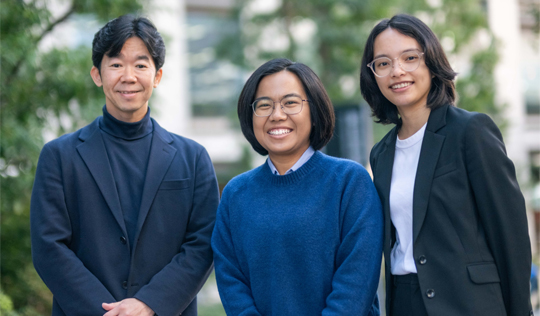
 RISE Structural Design, Inc.
Tokyo/Scientific Research, Professional and Technical Services
 Khaing Hsu Wai Myo
Myanmar/Graduate School of Urban Innovation, Yokohama National University Department of Infrastructure and Urban Society

Taking the First Step Toward Solving Challenges in Utilizing International Staff
Through Participation in the Internship Program
- Q.Why did your company decide to take on interns? What did you aim to achieve?
- Over the approximately seven years since we began hiring international staff, several challenges have gradually come to light. While our international employees have made great efforts to learn Japanese and adapt to the workplace, we lacked sufficient systems and environments to encourage interaction. As a result, Japanese employees also found it difficult to bridge the gap. Although some Japanese staff worked on improving their English skills, sustaining these efforts proved challenging, and over time, an unintentional divide emerged between “Japanese employees” and “international staff.” This was not due to poor relationships. On the contrary, both sides shared a desire to communicate but lacked the opportunity or catalyst to take the first step.
As a result, the capabilities of our international staff were not fully utilized.
Language barriers sometimes prevented instructions from being communicated accurately, making tasks that should have been performed smoothly appear otherwise. In some cases, misunderstandings arose on the management side observing the situation, leading to inaccurate evaluations of job performance by perceiving a “lack of ability to perform duties” here and there.
Despite no one being at fault, these structural challenges created frustration on both sides. With the concern that “hiring international staff without a proper support system might be unfair to them,” we shared our awareness of this issue with David, a mentor in our International Business Department. In response, she developed an “International Staff Utilization Plan.”
We decided to accept this internship as a valuable opportunity, not only with the expectation that it would provide meaningful insights into the validity of our “International Staff Utilization Plan,” but also as an important first step toward contributing to the achievement of our SDGs goals and promoting cross-cultural understanding within our organization.
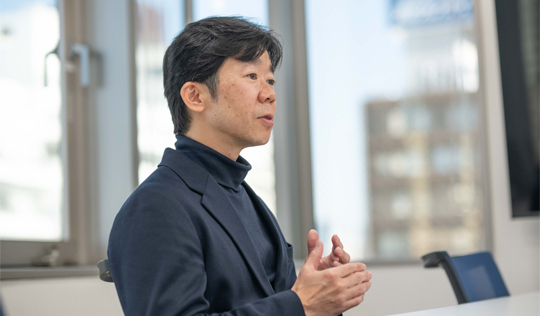

Encouraging Communication for Mutual Understanding
The Catalyst Was Cross-Cultural Exchange Sessions
- Q.What kind of internship did you run? What difficulties did you face and how did you resolve them?
- This internship was carried out primarily by the International Business Department, to which David and I belong, with the cooperation of various other departments. The intern also had the opportunity to experience hands-on work for four days each in the Structural Design Group and the Piping Group. Since structural design was a new field for Khaing, the intern, we intentionally arranged experiences across multiple departments to foster a broader, more comprehensive understanding.
One area we particularly emphasized was enabling her to experience Japanese workplace culture in a natural way. Because communication with mentor David and other international staff tended to be conducted mainly in English, we recognized the importance of actively creating opportunities for interaction with Japanese employees. This led to the introduction of “Cross-Cultural Exchange Sessions.” These sessions focused on practical themes such as “How do you report mistakes at work?” and encouraged participants to discuss these topics while sharing cultural perspectives from their respective countries. Each session was highly engaging, and through four sessions in total, nearly all employees had the opportunity to interact with Khaing.
As David noted, “We felt a strong sense of progress.” Employees involved showed a positive and open attitude, and the exchange sessions sparked natural conversations between Japanese staff and international staff who previously had limited interaction. Mutual interest and curiosity grew organically.
Khaingʼs own bright disposition and passion also played a key role in advancing communication. By openly asking questions and demonstrating a genuine desire to understand, Khaing inspired Japanese employees to feel, “I want to talk more” and “I want to be supportive.” These daily interactions, nurtured through the exchange sessions, helped soften the companyʼs “invisible walls” and laid the groundwork for more natural collaboration between Japanese and international staff.
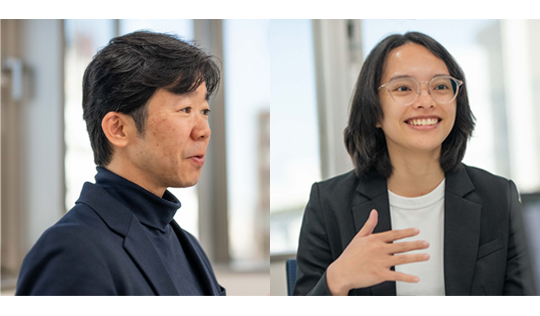

Transformation in Mindset and a New Breeze Brought About by Corporate Efforts to Improve and the Internʼs Passion
- Q.Comparing before and after the internship, what effects did it have on you, your employees, or your organization?
- The outcomes exceeded our expectations. One major outcome was the refinement of our International Staff Utilization Plan. Through active discussions during the Cross-Cultural Exchange Sessions, international staffs gained a deeper understanding of Japanese work culture, while Japanese employees had a valuable opportunity to view their own culture objectively. We plan to continue these sessions moving forward.
Another significant outcome was a shift in internal mindset. Khaingʼs positive attitude and eagerness to understand others reminded us of a mindset we had forgotten and motivated many employees to think, “I want to do my best as well.” It felt as though a fresh breeze had entered the organization. Khaingʼs energy became a driving force for more active communication, helping many employees reassess the value of working alongside international colleagues.
Ultimately, this internship went beyond simply providing skill-learning opportunities for Khaing. It generated meaningful results in cultural understanding, mutual exchange, and even organization-wide mindset transformation. We believe it was an important step in easing internal concerns about accepting International staff and advancing our international business initiatives.
Many companies considering International staff do so in response to overseas expansion or labor shortages. However, moving directly to employment can feel risky and there are challenges in taking that step. Internships, on the other hand, allow companies to work together in practice, clarify internal challenges, and identify areas where preparation is still needed, which then leads to improvements in acceptance systems. This represents a significant learning opportunity for companies. “If your company is hesitating, we encourage you to take the first step and try.” That is our honest message.


Finding My Path Through Structural Design: My Future and the Future of Myanmar
- Q.What did you get out of the internship?
- During the internship, I had the opportunity to learn structural design in a practical manner, including creating and evaluating structural models using structural calculations and analysis programs. Through the Cross-Cultural Exchange Sessions, I also learned about Japanese work styles and strengthened my ability to adapt to an international business environment.
One of the most important lessons I gained was the value of “consultation.” In Myanmar, it is uncommon to consult supervisors outside of formal meetings. In Japan, however, I learned that regular reporting and consultation are essential to completing work effectively. When I struggled with time management, instead of trying to solve the problem alone as I usually would, I consulted my mentor, David. Her advice on prioritization and efficient planning helped me complete my tasks ahead of the deadlines. I realized that consultation is not merely a problem-solving method, but an important Japanese business custom that enhances efficiency.
Above all, my greatest takeaway was discovering structural design. I joined this program hoping to gain international experience and discover my area of expertise, and through my time at RISE, I became convinced that structural design is the path I should pursue. Japanʼs structural design technology and expertise are among the best in the world, and learning in this environment is both a big challenge and a valuable growth opportunity. Looking ahead, I aim to gain hands-on project experience in Japan and set a new goal of obtaining a structural engineer qualification within five years.
Having witnessed building collapses caused by major earthquakes in my hometown in Myanmar, I deeply understand the importance of structural design. In the future, I hope to leverage the knowledge and network I have gained to bring high-quality technology back to Myanmar and serve as a bridge that creates a “win-win” relationship for both companies and countries.


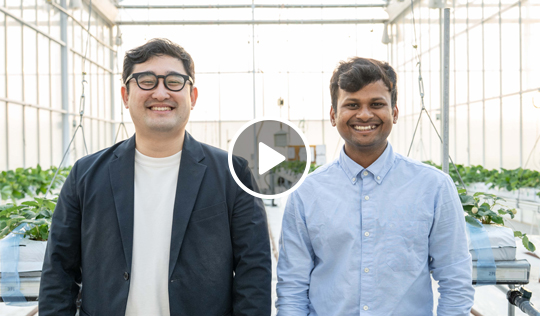
SEIWA CO., LTD.
Tochigi/Manufacturing
Aravindhakumar Kannan
India/Tamil Nadu Agricultural University, Agriculture

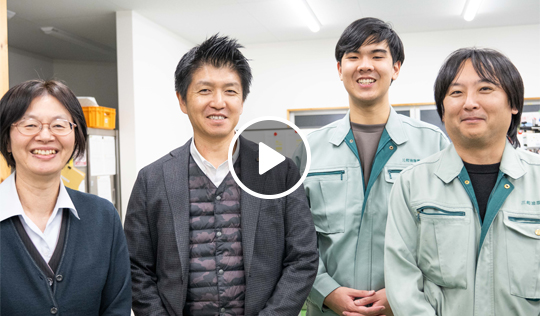
Sanwa Yushi Co., Ltd.
Yamagata/Manufacturing
Wachiravit Praypattaya
Thailand/Thai‑Nichi Institute of Technology, Faculty of Business Administration

SANYU Co.,Ltd.
Aichi/Real Estate / Leasing Services
Muhammad Syabil Baykhaqi
Indonesia / Universitas Islam Indonesia, Faculty of Law
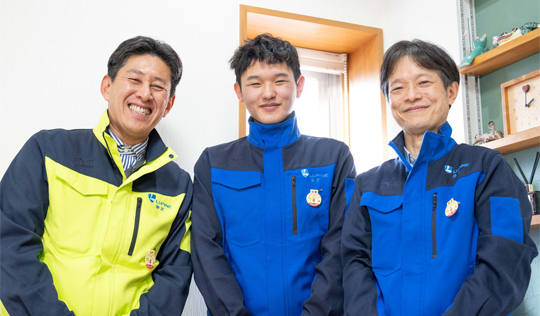
Lupine Chubu Kogyo Co.Ltd
Nagano/Construction
Orkhon Ganzorig
Mongolia/Mongol KOSEN College of Technology, Civil Engineering Department


3-6-5 Iidabashi , Chiyoda ku, Tokyo 102 8111 Japan(in Pasona Inc.)
Copyright Ministry of Economy, Trade and Industry. All Rights Reserved.